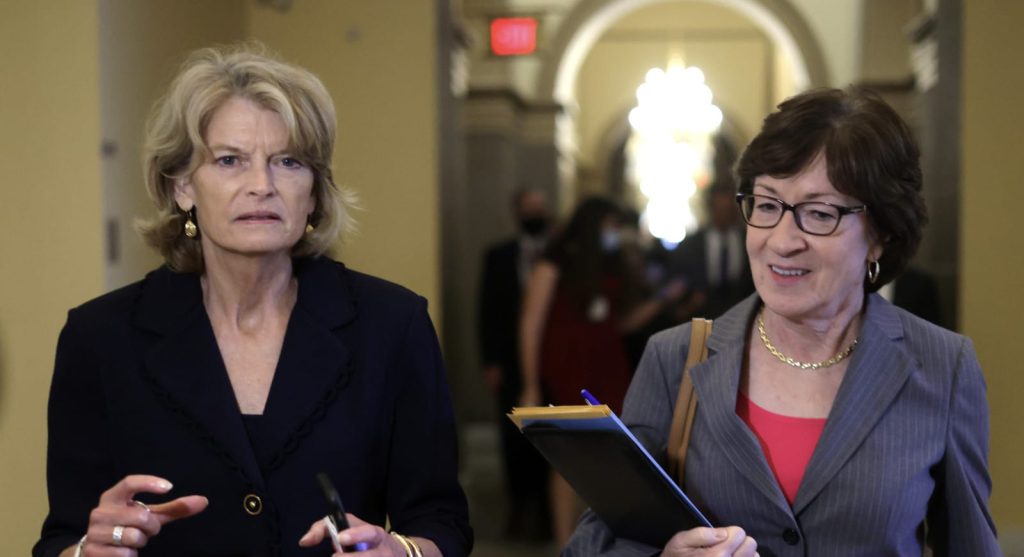
Republican Sen. Susan Collins has officially reaffirmed that she will seek re-election in the 2026 midterm elections, setting the stage for one of the most closely watched Senate races in the country.
During a 30-minute interview with Punchbowl News, the 72-year-old senator stated that her “position in the middle of American politics” motivates her to continue serving in the U.S. Senate.
“I still plan to run for re-election,” Collins said, noting her concern with the increasingly dysfunctional budgeting and appropriations process in Congress. “People who are in the middle are tending to leave. They’re tending to retire.”
A Changing Political Landscape in New England
Collins, who currently leads the Senate Appropriations Committee, highlighted that she is now the only Republican serving in either chamber of Congress from the six New England states—Maine, New Hampshire, Vermont, Massachusetts, Connecticut, and Rhode Island.
She contrasted today’s landscape with the more bipartisan climate of 1997, when she first entered the Senate.
“It was a much less polarized era, and it’s important to have voices of people who want to solve problems,” Collins said. “I like to bring people together to search for common ground.”
Collins urged politically centrist Americans to stay active and engaged:
“What we need in this country is for those in the center to be as riled up and involved as those on the far left and the far right.”
Early Polling Shows a Tight 2026 Senate Race in Maine
Recent polling suggests that Collins may face one of her toughest re-election battles yet.
A new Cygnal poll released Monday shows Collins trailing a generic Democratic candidate by eight points:
- Democratic candidate: 49%
- Susan Collins: 41%
The poll suggests that one key factor influencing the race is whether Collins supports extending Affordable Care Act (ACA) subsidies, which are set to expire.
Impact of ACA Subsidy Vote
According to the poll memo, Collins performs strongly with key demographic groups:
- College-educated women: +8 net
- Voters over 55: +6 net
- Swing voters: +10 net
If Collins votes to extend ACA tax credits, the race tightens significantly:
- Collins: 43%
- Democratic candidate: 45%
Although Democrats still hold a narrow lead, the numbers indicate a highly competitive contest.
CBS News reports that Collins supports extending the ACA subsidies but believes the program needs “reform.”
Potential Democratic Challengers
The Cygnal survey did not evaluate specific Democratic challengers, but Mills and Platner are currently locked in a competitive primary to determine who will face Collins.
A separate Maine People’s Resource Center poll last month showed:
- Collins vs. Mills: Collins +4 (46%–42%)
- Platner vs. Collins: Platner +4 (45%–41%)
That survey sampled 783 Maine voters between October 26–29, with a margin of error of ±3.5%.
What This Means for 2026
With shifting political dynamics, strong Democratic interest, and Collins’ unique position as New England’s lone congressional Republican, the Maine Senate race is expected to become one of the most consequential Senate battles of the 2026 midterms.
Collins has not formally launched her campaign but has made clear she intends to run—and the fight for her seat is already heating up.
Leave a Reply